

 No.84
No.84
文化人類学の研究
Research in Cultural Anthropology
アフリカ島嶼国カーボヴェルデでクレオール文化を研究
──初監督映画が「東京ドキュメンタリー映画祭」ダブル受賞
Studying Creole Culture in Cabo Verde, an African Island Nation
Directorial Debut Wins Two Awards at the Tokyo Documentary Film Festival
文学部
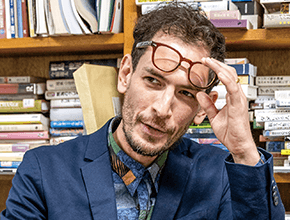
青木 敬 准教授
Faculty of Letters
Associate Professor Kay Aoki
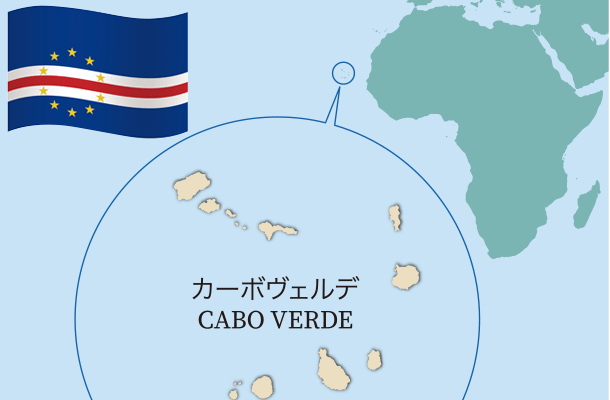
西アフリカ沖に浮かぶ島嶼国家──カーボヴェルデ共和国。2023年のバスケットボールW杯での対戦や2026年のサッカーW杯初出場国として日本でも注目を集めている。カーボヴェルデは15世紀からポルトガルの植民地だったが、1975年に独立。かつては大西洋奴隷貿易の拠点で、アフリカとヨーロッパの文化が混ざり合った「クレオール文化」が特徴だ。
文化人類学の視点でこの島国を研究してきた青木敬准教授は、12年間撮り続けた記録をもとに、ドキュメンタリー・民族誌映画『カルロスのレシピ(Rhythms of Sodade)』を制作。2025年の「東京ドキュメンタリー映画祭」人類学・民俗映像部門で準グランプリと観客賞のダブル受賞を果たした。
The Republic of Cabo Verde is an island nation off the coast of West Africa. The country has been gaining attention in Japan as an opponent at the 2023 FIBA Basketball World Cup and as a first-time qualifier for the 2026 FIFA World Cup. Cabo Verde was a Portuguese colony from the 15th century until it gained independence in 1975. Once a hub of the Atlantic slave trade, the country is defined by its "Creole culture," a fusion of African and European traditions.
Associate Professor Kay Aoki, who has studied the island nation through the lens of cultural anthropology, drew on 12 years of footage to produce the documentary ethnographic film "Rhythms of Sodade." The film won both the Runner-Up Grand Prix and the Audience Award in the Visual Anthropology and Ethnographic Film Competition at the 2025 Tokyo Documentary Film Festival.
-
-
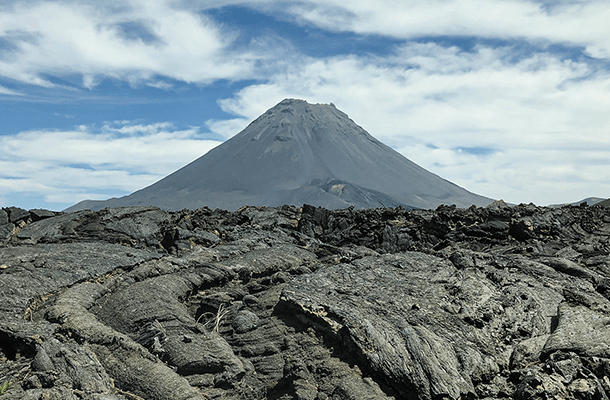
フォゴ島にそびえる火山ピコ・ド・フォゴ
The Pico do Fogo volcano towering over
Fogo Island
-
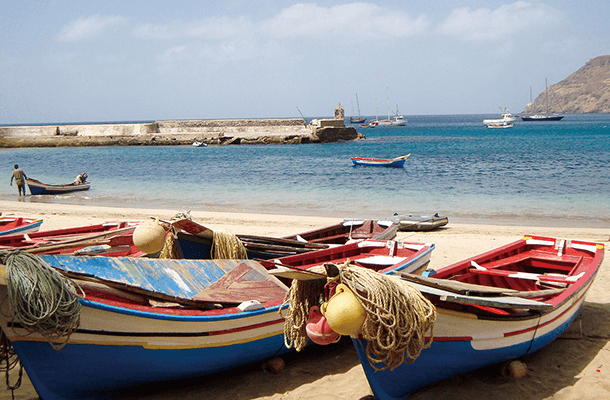
サンティアゴ島にあるタラファル・ビーチの風景
A view of Tarrafal Beach on Santiago Island -
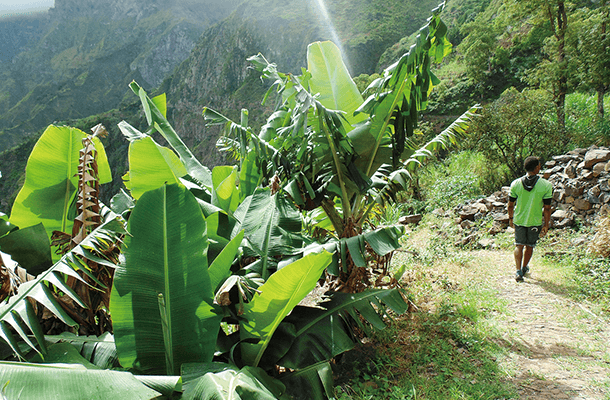
サントアンタン島の山間部に広がるバナナ園
Banana plantations spreading across the highlands
of Santo Antão Island
現地に溶け込み、対話を深める
専門分野について教えてください。
研究分野は文化人類学で、世界各地でのフィールドワークを通して、その地域の民族や文化を調査・研究し、「人間とは何か」という根源的な問いを探求する学問です。私は西アフリカの島嶼国カーボヴェルデの「クレオール文化」を中心に研究しています。クレオールとは、単に複数の文化が混ざった状態を指す言葉ではありません。植民地支配、奴隷制、移民といった歴史の中で、人々が生き延びるために編み出してきた生活様式や価値観の総体を指す概念です。カーボヴェルデは、こうしたクレオール文化が世界で最も早い時期に形成された場所の一つとして知られています。私の関心は、ポルトガル語を基盤とするクレオール語に端を発しましたが、やがて音楽、料理、語りといった日常実践へと広がっていきました。中でも、カーボヴェルデの伝統音楽「モルナ」は、歴史や記憶、感情が凝縮された表現として、私の研究の重要な軸になっています。現在は、モルナを含むさまざまな実践を手掛かりに、クレオール文化全体を総合的にとらえる研究を行っています。
私のフィールドワークは、現地の人々と生活を共にし、時間を重ねることから始まります。かつては、研究者は対象から距離を取り、介入せずに観察すべきだと考えられてきましたが、現在ではそのような「中立的な観察者」という立場そのものが問い直されています。私は、調査とは情報を集める作業ではなく、他者との関係が立ち上がっていく場に身を置くことだと考えています。フィールドワークでの経験は、自分が当たり前だと思ってきた世界の見え方を揺さぶり、組み替えていきます。その変化のプロセスを引き受けながら、人間のあり方を問い直していくこと。それが、私にとっての文化人類学です。
なぜカーボヴェルデに関心を持ったのでしょうか?
父が日本人で母がイギリス人なのですが、家庭内ではフランス語を使って育ちました。父はフランス語の言語学者で、私が大学で新しい言語を学びたいと考えていた頃、「ブラジルはBRICSの一角を占める国だから、ポルトガル語を学べば世界が広がる」と勧められ、ポルトガル語を専攻しました。また、幼少期に住んでいたフランスではアフリカ系移民の友人が多く、母からクレオール文化の話を聞く機会もありました。そうした経験が重なり、カーボヴェルデという国に自然と惹かれていきました。
フランス語、日本語、英語に囲まれて育ち、言語やアイデンティティの揺らぎを感じてきた自分自身の経験とも重なり、「クレオールとは自分の人生そのものだ」と感じたことが、現在の研究につながっています。
Immersing in the Community, Deepening the Dialogue
Tell us about your field of specialization.
My field is cultural anthropology, a discipline that investigates peoples and cultures around the world through fieldwork, exploring the fundamental question of what it means to be human. My research centers on the "Creole culture" of Cabo Verde, an island nation in West Africa. Creole doesn't simply refer to a blend of multiple cultures. It's a concept that encompasses the entire body of lifestyles and values that people forged in order to survive under colonial rule, slavery, and migration. Cabo Verde is known as one of the earliest places in the world where this kind of Creole culture took shape. My interest began with the Portuguese–based Creole language but gradually expanded into everyday practices like music, cooking, and storytelling. Among these, Cabo Verde's traditional music called "morna" has become a central pillar of my research as a form of expression that distills history, memory, and emotion. I'm currently working to build a comprehensive understanding of Creole culture as a whole, using "morna" and other practices as points of entry.
My fieldwork begins by living alongside local people and spending extended time with them. It was once believed that researchers should maintain distance from their subjects and observe without intervention, but today the very notion of the "neutral observer" is being challenged. I see fieldwork not as a process of collecting information, but as placing myself in a space where relationships with others come into being. Experiences in the field shake up and reshape the way you see the world and the things you'd always taken for granted. To embrace that process of transformation and use it to re–examine what it means to be human. That, for me, is what cultural anthropology is all about.
What drew you to Cabo Verde?
My father is Japanese and my mother is British, but I grew up speaking French at home. My father is a French linguist, and when I was looking to pick up a new language at university, he suggested that learning Portuguese would open doors since Brazil is a BRICS nation, so I chose Portuguese as my major. Growing up in France, I also had many friends from African immigrant families, and my mother would tell me about Creole culture. All of these experiences came together and naturally drew me toward Cabo Verde.
Having grown up surrounded by French, Japanese, and English, I've always felt a certain fluidity in my own language and identity, and that personal experience resonated so deeply that I came to feel "Creole is my own life story," which is what led me to my current research.
-
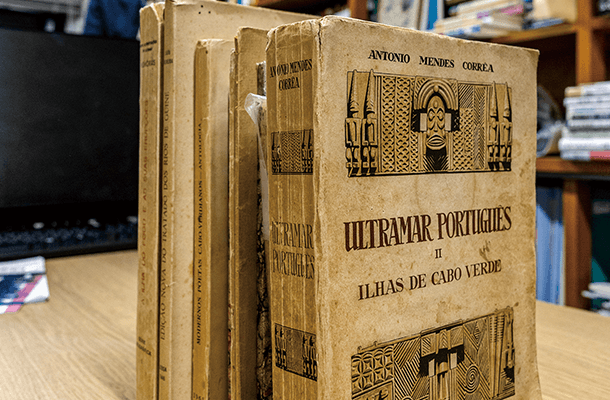
ポルトガル・リスボンの古書店で購入した本
Books purchased at a secondhand bookshop in Lisbon, Portugal -
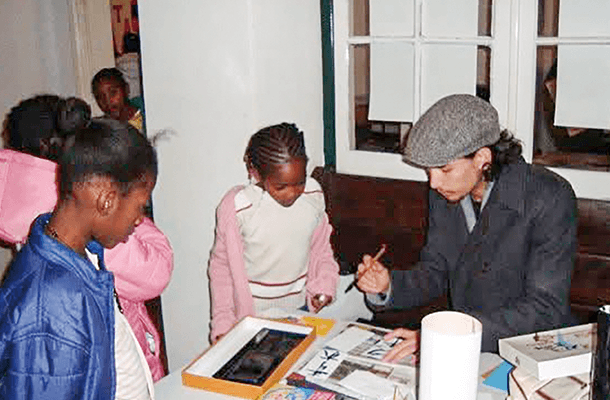
ポルトガル・コインブラ大学への留学時代
During his overseas studies at the University of Coimbra, Portugal
島民の記憶の響き「ソダーデ」という感情
カーボヴェルデの魅力は何ですか?
15の島々から成り、美しいビーチもある沖縄のような国です。人口は60万人弱ですが、国外には移動の歴史を共有する100万人以上から成るディアスポラ(移民やその子孫から成る国外居住者コミュニティ)が形成されており、海外からの送金と観光業が国の経済を支えています。もともとは無人島でしたが、15世紀にポルトガル人が「発見」。大西洋奴隷貿易の中継地として栄え、その歴史の中で、ヨーロッパ系とアフリカ系の人々が出会い、クレオールという人・言語・文化が形づくられていきます。
カーボヴェルデのクレオール文化には、私の映画の英題にもなった「ソダーデ」と呼ばれる感情が深く根付いています。郷愁や望郷にも近いこの感覚は、移動や別離を繰り返してきた島民の歴史と強く結び付いています。奴隷制の時代から連なってきたこうした記憶の層そのものが、カーボヴェルデの大きな魅力だと感じています。裕福とは言えなくても、音楽を愛し、島のラム酒を飲み、踊りながら、「その日その日」を懸命に生きる人々の姿にも惹かれます。同じ島国ということもあり、感情をあからさまに表に出さないところなど、どこか日本人と通じるものを感じることもあります。
映画の主人公・カルロスとはどうやって出会ったのですか?
2013年、2度目のカーボヴェルデ訪問では、フィールドワークのために半年間滞在しました。途中で資金が尽きて、寝る場所もなく困り果ててバーのマスターに泣きついたところ、近所に住むカルロスを紹介されたのです。部屋を安く貸してくれ、一緒に酒を飲み、歌を歌って親しくなると、複雑な素顔も見せてくれるようになり、その生き方を記録させてもらうようになりました。
実は映画が完成した2025年夏、カーボヴェルデを豪雨洪水災害が襲い、カルロスのパートナーの女性が行方不明となるという悲報がありました。私も精神的に大きなショックを受けましたが、カルロスが泣くところを初めて目にし、改めて彼らが生活をするのは、生と死が隣り合わせにある世界だということを思い知らされました。
映画制作での苦労と喜びを教えてください。
以前から映像人類学も少しずつ勉強していたのですが、本格的な映画制作は初めてで大変でしたね。共同監督の長良将史さんから機材の扱い方や編集の方法を学び、演劇関係の仕事に携わっていた母にもアドバイスをもらいつつ、授業の後に研究室にこもって、約2週間ほぼ寝ずに編集作業を続けました。一番の喜びは、映画祭で自分の映画が上映され、多くの仲間や両親が観てくれたことですね。ただ「完成した作品を観てもらえた」という達成感だけではありませんでした。スクリーンを介して、観る側それぞれの経験や記憶が重なり合い、その場で新たな「ソダーデ」が立ち上がっていく感覚があったのです。それまで私にとって映画は、あくまで観客として消費するものでした。しかしこの作品を通して、映画は人と人の間に共鳴を生み出し、それぞれの感情や記憶が重なり合っていく場になりうるのだと実感しました。そのことに気づけた瞬間が、制作を通じて得た最大の収穫だったと思います。
The Resonance of Islanders’ Memory: The Emotion Known as “Sodade”
What makes Cabo Verde so compelling?
It's made up of 15 islands with beautiful beaches–think of it as somewhat like Okinawa. The population is just under 600,000, but over a million people with shared roots in the country's history of migration form a diaspora abroad, and the economy is sustained by overseas remittances and tourism. The islands were originally uninhabited until the Portuguese "discovered" them in the 15th century. They flourished as a waystation for the Atlantic slave trade, and it was through that history that European and African peoples came together, giving rise to a distinct Creole identity, language, and culture.
Deeply embedded in Cabo Verde's Creole culture is an emotion called "sodade," which also became the English title of my film. "Sodade" means something like nostalgia or a longing for home. It's a feeling that’s inseparable from the islanders' history of repeated migration and separation. For me, it's these accumulated layers of memory stretching back to the era of slavery that make Cabo Verde so deeply fascinating. I'm also drawn to the people themselves. They may not be wealthy, but they love music, they drink the island’s rum, they dance, and they live each day to the fullest. Perhaps because both countries are island nations, I sometimes feel a certain affinity with Japanese people, particularly in the tendency not to express emotions openly.
How did you meet Carlos, the main subject of your film?
In 2013, during my second visit to Cabo Verde, I stayed for six months to conduct fieldwork. Partway through, I ran out of money and had nowhere to sleep, so I desperately turned to a bar owner for help and he introduced me to Carlos, who lived nearby. Carlos rented me a room at a low price, and as we grew closer by drinking together and singing, he gradually began to reveal the more complex sides of himself and eventually allowed me to document his way of life.
In the summer of 2025, just as the film was completed, Cabo Verde was hit by devastating floods, and Carlos's partner went missing in a tragic event. I was deeply shaken myself, but seeing Carlos cry for the first time drove home the reality that these people live in a world where life and death are never far apart.
Tell us about the challenges and rewards of making the film.
I'd been gradually studying visual anthropology for a while, but this was my first time making a full-scale film, and it was tough. I learned equipment handling and editing techniques from my co–director Masashi Nagara, got advice from my mother who has a background in theater, and then holed up in my office after classes, editing almost without sleep for about two weeks straight. The greatest joy was seeing my film screened at the festival, with so many friends and my parents there to watch it. But it wasn't just the satisfaction of having people see the finished product. Through the screen, each viewer's own experiences and memories seemed to layer on top of one another, and I could feel a new kind of "sodade" coming alive in the room. Until then, film had always been something I consumed as a spectator. But this project showed me that film can create resonance between people and become a space where individual emotions and memories converge and intertwine. That moment of realization was, I think, the most valuable thing I took away from the entire process.
-
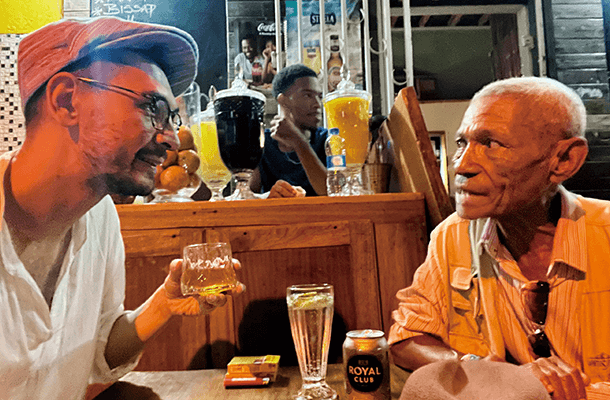
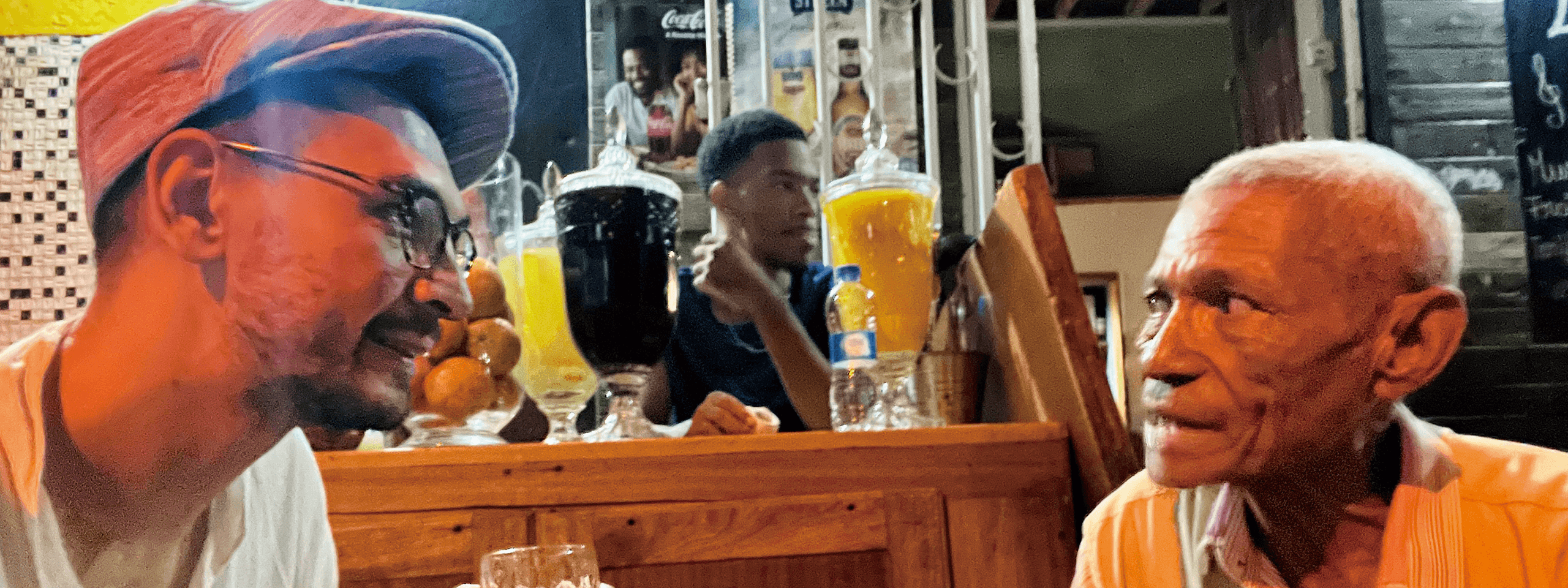
取材を通して次第に親しくなっていく青木准教授とカルロス氏
Associate Professor Aoki and Carlos, gradually building a rapport through the course of the interviews -
![[映画]『カルロスのレシピ(Rhythms of Sodade)』のワンシーン](images/84/8.png)
[映画]『カルロスのレシピ(Rhythms of Sodade)』のワンシーン
[Film] A scene from "Rhythms of Sodade"
-
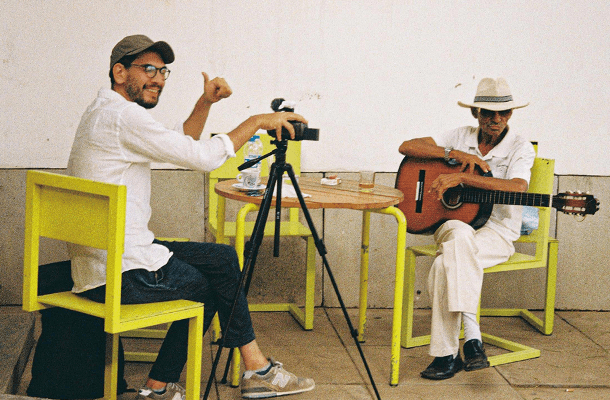
カルロス氏を取材撮影する青木准教授
Associate Professor Aoki filming Carlos during an interview -
[映画概要]『カルロスのレシピ(Rhythms of Sodade)』
(監督:青木敬、長良将史/2025年/108分/カーボヴェルデ・日本)
カーボヴェルデ北西部のサンヴィセンテ島。カルロスはアルコールと薬物依存に翻弄されながら日々を生きている。その歩みの背後に絶えず響いているのが、カーボヴェルデに深く根差した感情「ソダーデ」である。単なる郷愁を超え、奴隷制の時代から音楽を通して受け継がれてきたソダーデは、今も人々の記憶に息づいている。カルロスの声と記憶、そして音の風景をとらえることで、この民族誌映画はソダーデの一端を映し出す─それは個人の悲しみであると同時に、歴史が響かせる共鳴でもある。[Film Synopsis] Rhythms of Sodade
(Directors: Kay Aoki, Masashi Nagara / 2025 / 108 min / Cabo Verde–Japan)
On São Vicente, in the Cabo Verde islands, Carlos spends his days caught in the undertow of alcohol and drug dependence. Running through it all is the less tangible but far more enduring feeling of "sodade". More than longing or melancholy, "sodade" is a cultural expression of absence and remembrance that has echoed through Creole lives since slavery. Woven into music and oral traditions, it carries displacement, resilience, and an unbroken connection to what has been lost. Through Carlos's memories and the soundscapes that shape them, this ethnographic film offers a glimpse of "sodade"–at once a deeply personal sorrow and a shared historical resonance carried in rhythm and voice.
映像人類学の視点でクレオール文化を追究
「東京ドキュメンタリー映画祭」での反響はいかがでしたか?
審査員の1人からは、「世界各地を転々として故郷に戻ったカルロスの行動や奏でる音楽、作る料理からソダーデの感情が深く描かれている」と高い評価をいただきました。観客の方からも「カルロスが魅力的」、「クレオール文化に懐かしさを覚えた」などと好評で観客賞にもつながりました。自分の映画が私から離れ、独り歩きを始めた感覚でした。
今後の上映予定と、新たな映像作品の制作予定を教えてください。
2026年5月13〜17日開催の「German International Ethnographic Film Festival(ドイツ国際民族誌映画祭)」での上映選出も決まりました。
また、カーボヴェルデの3会場とポルトガルのリスボンでの上映が決まっています。今後はカーボヴェルデの音楽「モルナ」をテーマにドキュメンタリー映像作品を撮りたいと考えています。モルナはポルトガルのファドにも似ていますが、ゆっくりした4拍子で独特なリズム。歌詞はソダーデや愛を歌うものが多く、日本の演歌に似ているかもしれません。将来的には、カーボヴェルデにとどまらず、ポルトガル語圏の環大西洋世界に広がる音楽文化や日常実践を映像として記録し、アフリカの島嶼地域からブラジルに至るまで、人々が「混ざり合っていく」過程の先に何があるのかを探っていきたいと考えています。その中で、世界各地に存在するクレオール文化を、より立体的にとらえていきたいですね。
Exploring Creole Culture Through the Lens of Visual Anthropology
What kind of response did the film receive at the Tokyo Documentary Film Festival?
One of the jurors praised the film highly, noting that the emotion of "sodade" was powerfully conveyed through Carlos's journey of wandering the world and returning home, as well as through the music he plays and the food he cooks. Audience members also responded warmly, with comments like "Carlos is captivating" and "Creole culture stirred a sense of nostalgia in me, " and it was feedback such as this that ultimately led to the Audience Award. It felt like the film had left my hands and taken on a life of its own.
What are the upcoming screening plans, and do you have any new film projects in the works?
The film has also been selected for screening at the German International Ethnographic Film Festival, to be held May 13–17, 2026.
Screenings are confirmed for 2026 at three venues in Cabo Verde and in Lisbon, Portugal. Going forward, I'd like to make a documentary centered on "morna", the traditional music of Cabo Verde. "Morna" shares some similarities with Portuguese "fado", but it has a distinctive rhythm with a slow 4/4 time. The lyrics often deal with "sodade" and love, and in some ways you could compare it to Japanese "enka". Looking further ahead, I want to move beyond Cabo Verde and document the music cultures and everyday practices found across the Portuguese–speaking trans-Atlantic world–from Africa's island regions to Brazil–and explore what lies at the end of this ongoing process of people "blending together." Through that work, I hope to build a richer, more multidimensional picture of Creole cultures that exist around the world.
-
-
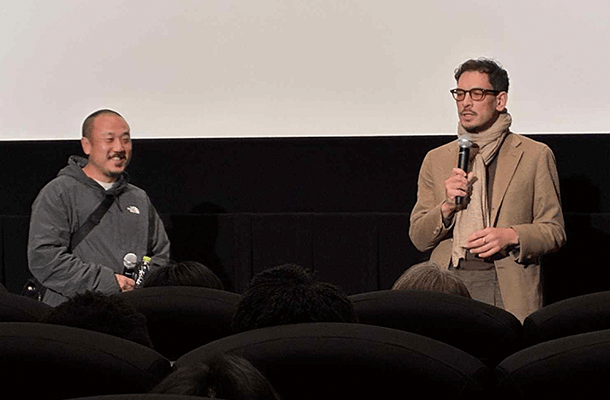
舞台挨拶で共同監督の長良氏(左)とともに
At the post-screening remarks with co-director Masashi Nagara (left)
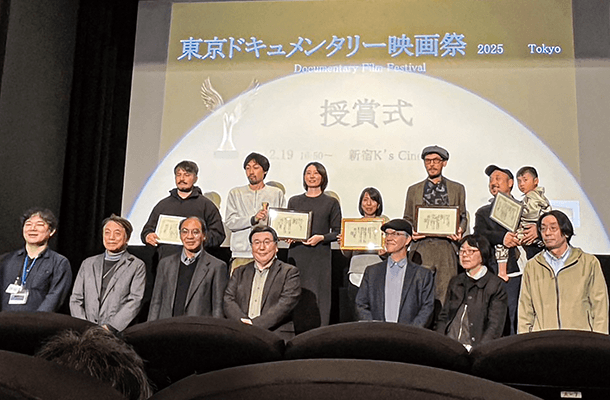
東京ドキュメンタリー映画祭で『カルロスのレシピ』が準グランプリと観客賞をW受賞
"Rhythms of Sodade" won both the Runner-Up Grand Prix and the Audience Award at the Tokyo Documentary Film Festival